- Call: +971585020375
- Email: admin@learningnepal.com

By shekhar
In Nepal, learning practical skills is one of the smartest investments you can make—especially if you're planning to work abroad, start a business, or secure a job within the country. While formal education is valuable, employers increasingly seek candidates with hands-on experience. The good news is that Nepal has many government-recognized training centers offering high-quality skill development programs across a wide range of fields—from electrical work and plumbing to health care and computer training. In this article, we’ll highlight the top institutions officially approved by the Nepali government that are helping thousands build job-ready skills.
The Council for Technical Education and Vocational Training (CTEVT) is the leading government body responsible for technical and vocational education in Nepal. It oversees more than 1,000 institutions and provides a wide range of training, including diploma programs, short-term skill development, and certificate-level courses. Whether you're interested in engineering, agriculture, health sciences, or hospitality, CTEVT has structured courses that combine theory and real-world application. Importantly, these qualifications are recognized not just in Nepal, but also by many international employers.
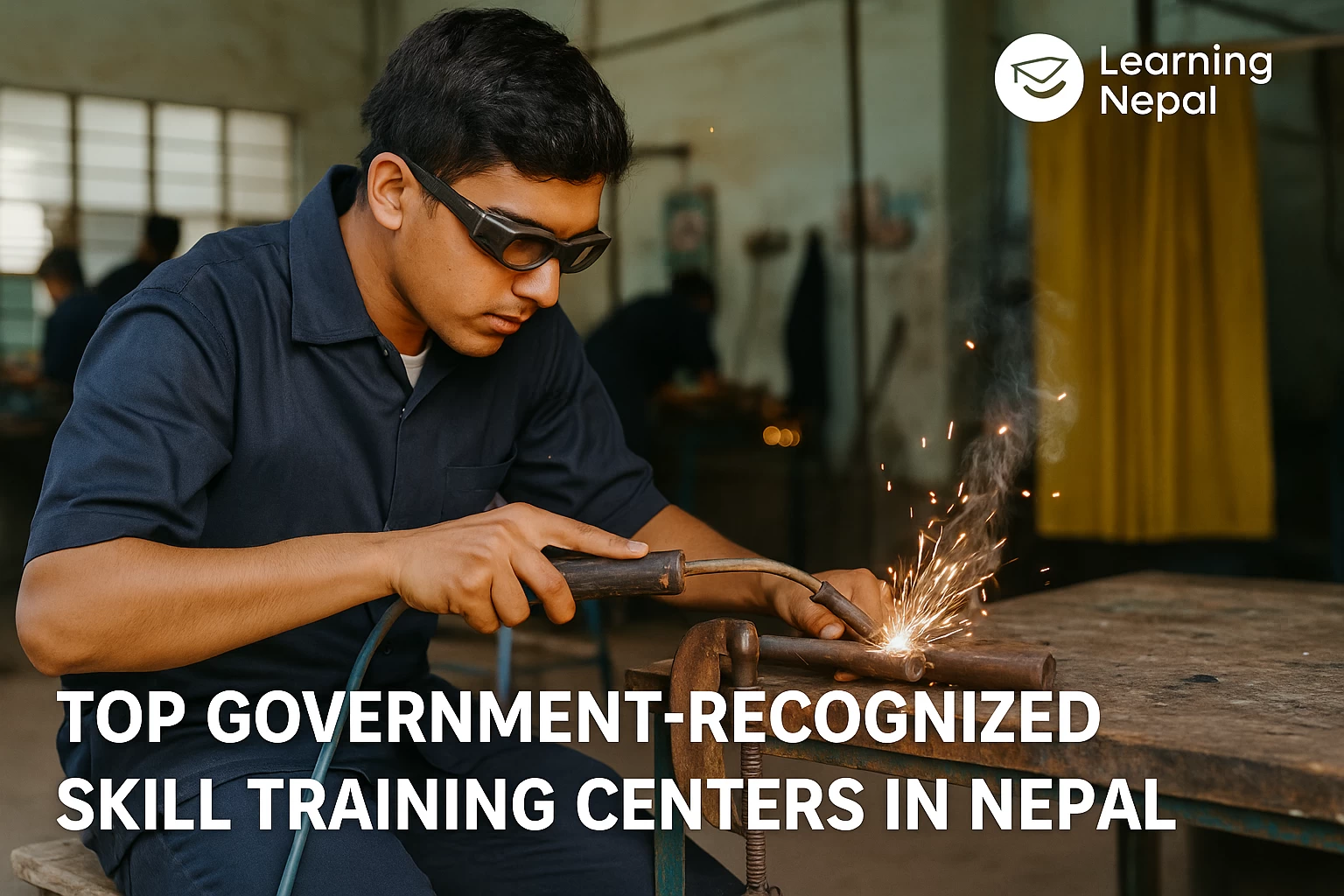
SDTCs are operated by the Ministry of Labor, Employment and Social Security and are designed to equip Nepali youth with skills needed in the domestic and foreign job markets. These training centers are distributed across districts and offer short-term courses (usually 3 to 6 months) in fields such as plumbing, tailoring, welding, house wiring, and mobile repair. These courses are practical, affordable, and aimed especially at individuals who may not have formal academic backgrounds but are eager to work or start their own business.
If you already have hands-on experience but no formal certificate, the National Skills Testing Board (NSTB) gives you a chance to prove your competence through the Recognition of Prior Learning (RPL) process. NSTB assessments evaluate your skills and issue an official government certificate, which is highly useful for applying for jobs or foreign employment. Whether you're a returnee migrant worker or someone with informal training, NSTB’s certification can open doors for better employment.
With federalism in full implementation, several provinces such as Bagmati, Gandaki, and Koshi now run their own skill development programs based on local employment needs. These training centers provide courses in agriculture, handicrafts, animal husbandry, driving, basic computer literacy, and office assistance. Training schedules, content, and access vary by province, but most programs are subsidized or free for eligible youth. You can check your provincial or municipal website for current offerings and application deadlines.
Many Nepalis planning to go abroad for work must attend mandatory pre-departure training. In addition to safety and rights awareness, some centers provide job-specific training like housekeeping, caregiving, and construction-related skills. These programs not only help workers adjust in foreign environments but also improve their chances of landing better-paying and safer jobs. Most of these centers are authorized by the government and are monitored for quality.
Nepal’s growing network of government-recognized skill training centers is changing the game for youth, job seekers, and aspiring entrepreneurs. These institutions are practical, accessible, and aligned with both domestic and international job markets. Whether you want to upgrade your skills, receive a recognized certificate, or boost your chances of working abroad, now is the time to take action.
👉 For flexible online learning options in digital, business, and creative skills tailored for Nepali learners, explore courses at LearningNepal.com.
Your email address will not be published. Required fields are marked *






0 Comments